

DEXA/Body Composition Scanner
Know your numbers. Protect your future. Build a smarter wellness plan.
A DEXA (Dual-Energy X-ray Absorptiometry) scan is a quick, non-invasive scan that helps you understand what’s happening inside your body—so you can make confident decisions about your health. At Ascentis Health and Wellness, we use DEXA scanning to support bone health screening and body composition tracking with clear, easy-to-understand results.
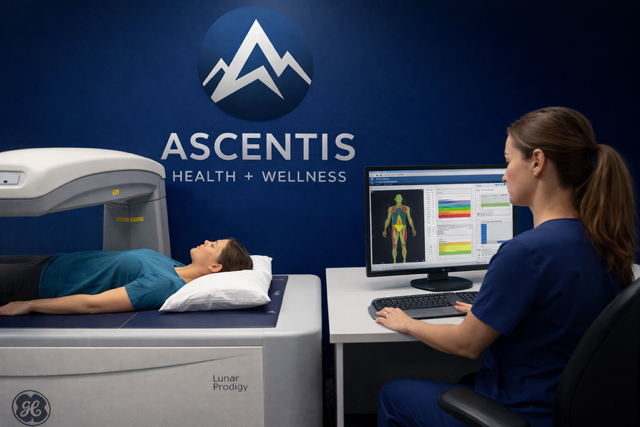
What a DEXA Scan Measures
Bone Density (Bone Health)
DEXA measures bone mineral density, helping detect osteopenia or osteoporosis early—often before a fracture happens. Early awareness creates opportunity: you and your provider can make proactive changes to protect strength, mobility, and long-term independence.
Body Composition (Beyond the Scale)
Your weight doesn’t tell the full story. Body composition helps you see how much of your body is made up of lean mass and fat mass, so you can track real progress—especially if you’re focused on medical weight loss, strength, performance, or longevity.
Why Clients Get a DEXA Scan
Detect osteoporosis early
- DEXA is the only test that can detect osteoporosis before a fracture occurs—helping support prevention.
Track bone health over time
- Bone density naturally changes with age. Regular scanning helps you monitor your trends and take action sooner.
Assess fracture risk
- If you’re 50+ or have had a fracture, a DEXA scan can help assess bone strength and risk.
Measure progress accurately
- For body composition goals, DEXA helps you track changes that matter—like preserving lean muscle mass while losing fat.
Who Should Consider a DEXA Scan?
DEXA may be a great fit for clients who are:
- Women 65+ or Men 70+
- Anyone 50+ who has had a fracture
- Individuals with a family history of osteoporosis
- Those with medical conditions that affect bone health (example: diabetes, lupus, IBD, celiac, etc.)
- Smokers
- Anyone wanting a clearer picture of body composition (fat vs. lean mass) to guide a wellness plan
What to Expect
- The scan is quick and painless—similar to an X-ray, but with lower radiation used to measure bone density.
- There are no needles, injections, pain, or hassle.
- You can usually wear your regular clothes—just avoid metal (zippers, heavy jewelry, belts).
- Results are typically ready within 24–48 hours (and often sooner).
How the Scan Works
- The exam takes about 15–30 minutes
- You’ll lie on a special table while a technologist scans key areas—typically your spine and hips
- The scan is painless and requires no injections
- You’ll receive results showing whether your bone density is healthy or if you may be at risk for osteopenia/osteoporosis (often the same day)
Understanding Your Results (T-Score)
DEXA results often include a T-score, a primary measure of bone density:
- 0 to -1 = Healthy bone density
- -1 to -2.5 = Osteopenia (low bone mass)
- -2.5 or lower = Osteoporosis (higher fracture risk)
Next steps: Your provider may recommend strategies such as nutrition, exercise, lifestyle updates, and—when appropriate—medical therapies to support bone strength.
Frequently Asked Questions
Is it safe?
DEXA uses low-level radiation and is considered a standard tool for bone health screening.
Do I need this if I feel fine?
Osteopenia and osteoporosis can develop silently. Many people don’t know until they experience a fracture—DEXA helps you get ahead of that risk.
How often should I scan?
Every one to two years based on individualized evaluations. Your provider can guide timing based on your risks and goals.
Ready to Schedule?
If you’re ready to understand your body more clearly—bone strength, body composition, and trends over time—our team is here to help.